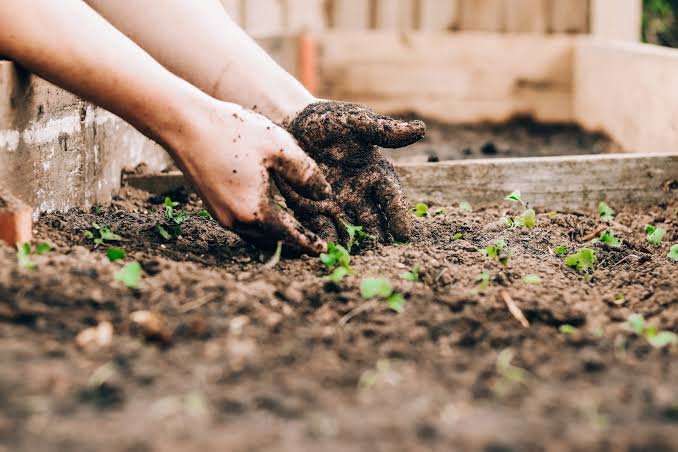
What to Know Before Preparing Soil for a New Garden
What to Know Before Preparing Soil for a New Garden Before you buy plants or order soil for a new garden bed, find out what's happening underground. Compaction, poor drainage, low-quality fill, and a…
What to Know Before Preparing Soil for a New Garden
Before you buy plants or order soil for a new garden bed, find out what's happening underground. Compaction, poor drainage, low-quality fill, and a lack of usable topsoil can all create problems long after planting. Fixing them before the bed is built is easier than fixing them after.
I supply topsoil, compost and soil amendments for a living. I see many of these problems before a garden is even planted, and I hear about them again when a step gets skipped.
Start by Testing What You Already Have
Before changing anything, find out what you're actually working with. A basic soil test shows the pH, the nutrient levels, and roughly how much organic matter is already there. University of Georgia Extension recommends sampling garden and lawn soil from the top 150 mm (6 in). A shallower or deeper sample can skew the results even when the lab work itself is accurate.
It's a step I see homeowners skip regularly. In my experience, the wrong amendment, lime on ground that's already alkaline, for instance, can leave a garden struggling for most of a growing season instead of fixing anything.
Chemistry only tells part of the story, though. While you're digging the test hole, look at the soil itself. Heavy grey or orange clay a few centimetres down, a layer you can't push a trowel through, or water still sitting in the hole later, all point to a structural problem a pH reading won't explain.
Deal With Compaction and Drainage Before Anything Else
This step gets skipped most often, and it causes the most repeat problems. In my own work, the mistake I see constantly: someone adds a fresh layer of topsoil on top of ground that's still compacted or draining poorly underneath. The new soil looks fine for a season. Then the same waterlogging or poor growth comes back, because the new layer was never the actual problem.
New soil on top of a compacted layer doesn't fix that layer. Water still can't move through it. Roots still can't push into it. The improvement is cosmetic, not structural.
Before adding anything, loosen the existing ground when conditions are suitable, using a garden fork or broadfork for a smaller bed and appropriate mechanical equipment for larger areas. Michigan State University Extension recommends checking those conditions with a simple test first. Compress a handful of soil into a ball, then poke it. If it holds together instead of crumbling, the ground's too wet to work. Tilling or digging it wet compacts it further instead of loosening it, which defeats the point.
If the ground stays waterlogged after you've dealt with compaction, the problem is probably drainage, not soil quality. Depending on the site, that might mean grading the area to direct water away, adding a swale, or installing a drainage system. Standing water that won't go away is a site problem, worth fixing before you bring in new soil.
Not every drainage problem is about compaction, though. Some sites sit at the bottom of a slope where water from higher ground collects. Others have naturally heavy clay that drains slowly no matter how loose the surface is. Check how the ground behaves after breaking it up, rather than assuming one fix solved both problems. That gives you a much better indication of which problem you're actually dealing with.
Build the Soil Back Up With Organic Matter
Once the ground underneath is workable, organic matter turns loosened soil into something that keeps improving on its own. Compost, well-rotted manure and leaf mould can all add organic matter as they break down, helping improve soil structure and water movement. As that organic matter breaks down, it generally helps bind soil particles into small aggregates, and the gaps between those aggregates are what let air and water move through instead of pooling on top.
Colorado State University Extension recommends working compost into the top 150 to 200 mm (6 to 8 in) of soil so it actually improves structure instead of just sitting on the surface. This won't rebuild soil structure in a single season, but it restarts a process that keeps improving the ground on its own, instead of needing everything added back by hand indefinitely.
Decide Whether You Actually Need New Topsoil
Sometimes there simply isn't enough real soil left to improve. This is common on newer builds, where contractors strip the original topsoil during construction and leave compacted subsoil, clay, or rubble-filled fill behind. If your test hole shows hard clay a few centimetres down, or a pale grey or orange colour with none of the dark, crumbly texture of real topsoil, amending what's there will only go so far.
In that situation, bringing in fresh topsoil to build a proper base layer usually works better than trying to rebuild subsoil that was never meant to support plants. Compost alone can improve subsoil's behaviour somewhat, but it doesn't turn clay or construction fill into topsoil. The mineral content and structure are just different from what was there originally. Replacing the missing layer, instead of trying to coax the wrong material into acting like the right one, is usually the faster route to a bed that actually performs.
If you do need new topsoil, don't judge it by colour alone. Ask where it came from, what it contains, whether it's been screened, and whether it's been blended or amended. A dark-looking load isn't automatically good growing soil, and material with too many rocks, debris or leftover construction fill can create a new problem instead of solving the old one.
Often the honest answer sits between the two extremes. A test hole might turn up a thin, reasonable layer of topsoil over average, workable subsoil, rather than either good ground or compacted fill. In that case, blending a smaller amount of new topsoil into what's already there, alongside the compost covered earlier, often gets a bed to a usable depth without paying for a full replacement.
How you buy it matters for the budget, and it's also one of the questions I get most often from customers. For larger beds, bulk topsoil is often more economical than buying the same volume in bags, although delivery fees, minimum order quantities and local pricing can affect the final cost. Bagged soil only makes sense for small beds or container planting, where a few bags cover the job.
One cubic metre covers 10 m² at 100 mm deep, or about 6.7 m² at 150 mm deep. For a rectangular bed, multiply length by width by depth, all in metres, to get the volume needed. A 5 m by 2 m bed filled to 150 mm needs 1.5 m³ of soil. This is theoretical coverage before settling, waste, or an irregularly shaped bed, so measure the actual area and round up rather than ordering to the exact figure.
Get the Depth Right Before You Plant
For a typical new garden bed, I aim for around 150 to 200 mm (6 to 8 in) of good-quality growing soil, but that's a practical target, not a universal minimum. The right depth depends on the plants, the existing soil, and whether the bed sits over usable topsoil or compacted subsoil. Shallow-rooted planting, bedding annuals or a lawn, for example, can work with the lower end of that range over reasonably good existing ground. Anything going into poor or heavily amended subsoil, or deeper-rooted perennials, shrubs and small trees, does better nearer the upper end.
What the test hole turned up earlier feeds straight into this number. A bed getting a full replacement needs the new material to cover the whole 150 to 200 mm. A bed getting blended in, the approach covered above, may already have some of that depth accounted for, so it's worth measuring what's actually there before assuming you need the full amount on top.
Once the depth is right, give the bed time to settle before planting, especially if it's freshly amended or filled. Leave a little room when calculating the finished level, rather than assuming freshly placed soil will stay exactly where it starts. How much it settles depends on the material, how it was placed, moisture, and how much it's disturbed, so check the level again after the first few watering or rain events rather than relying on a fixed allowance. Planting into ground that hasn't settled yet often means dealing with exposed roots or an uneven surface within the first season, undoing the levelling work you just did.
Get the Order Right
Check the existing soil first. Address compaction and drainage before adding material. Decide whether the soil can be improved, needs replacing, or needs a bit of both. Then calculate the depth and volume before ordering anything.
That order matters more than any individual product. Good soil added to a poorly prepared site can still produce a poor garden. Prepare the ground first, and everything after it has a much better chance of working.
About the Author
Megan Lambert supplies topsoil, compost, mulch and soil amendments through AHC Landscape Supply, working with homeowners and contractors around the Atlanta, Georgia area.
Sources
- University of Georgia Extension - soil sampling guidance for lawns and gardens.
- Colorado State University Extension - guidance on incorporating compost into soil.
- Michigan State University Extension - guidance on assessing soil moisture before tilling or digging.
Get the next one by email
One considered piece every other Thursday. No affiliate links.
Keep reading

Top 5 DIY Home Improvements to Increase the Overall Value
If you’re a proud homeowner than you more than likely take pride in keeping your house clean and in order both inside and out. With the thought of either retiring in your current home or maintaining…

What is the difference between a studio roof and a gable roof?
When you’re looking at installing a new sunroom, it can be easy to get caught up in the big picture, planning out what to do with all the extra space and how you’ll entertain throughout the year with…
4 steps to install a patio cover
The long Calgary summers come as a blessed relief after the seemingly endless winter months, and it’s important to try to maximize your outdoor time, as you’ll be forced inside again before you know…
Be the first to comment
Loading the thread…